

Weaving craftsmanship and reflection: The making of Sunday to Sunset’s “The Golden Hour Archive” clothbound journal.
At DATAGRAPHIC, we believe that print is more than just ink on paper; it’s a tangible experience, a tactile connection to ideas and emotions. When the team behind Sunday to Sunset approached us with their vision for “The Golden Hour Archive,” we knew we were embarking on a project that resonated deeply with this philosophy. This wasn’t going to be just another journal; it was designed to be a “canvas for reflection” – a companion for navigating life’s moments – and DATAGRAPHIC was entrusted with bringing this unique concept to life.
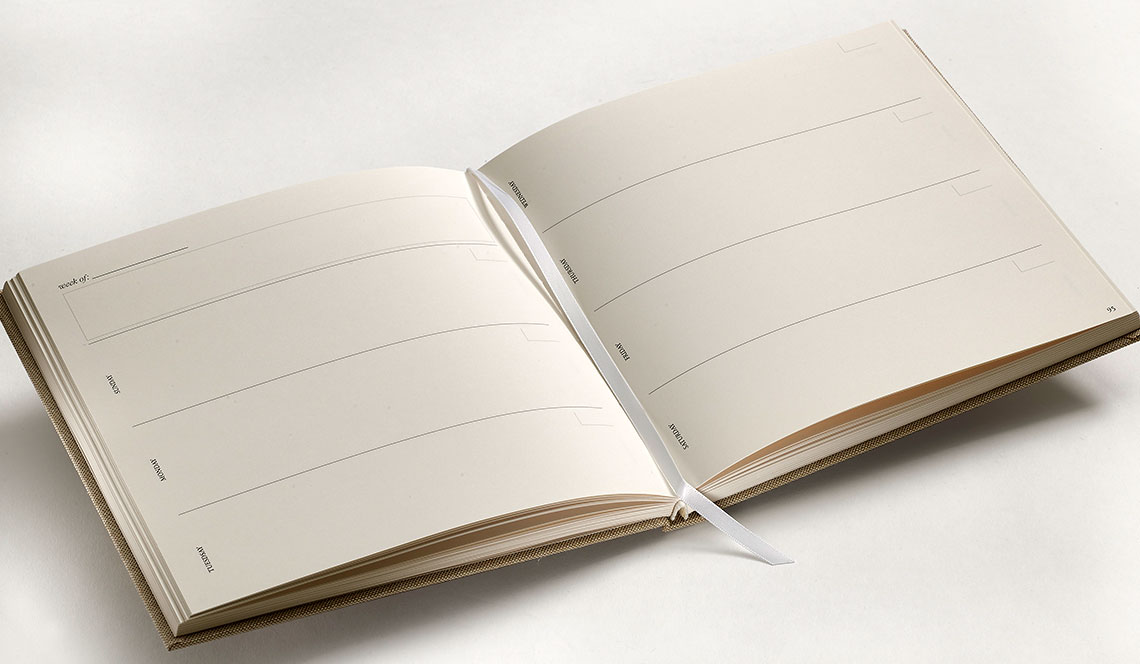
The result, “The Golden Hour Archive,” is a testament to the power of thoughtful design and meticulous craftsmanship. This 204-page clothbound journal, with its twelve undated and untitled chapters, invites users to engage in museboarding, scrapbooking, and journaling within its thoughtfully structured pages. The inclusion of month and weekly spreads before and after each chapter provides a framework for both planning and reflection. Complemented by a table of contents and index, the Archive is both functional and deeply personal.
Our process for producing this exceptional piece involved a careful selection of materials and the application of specialized printing and finishing techniques. From the initial concept to the final bound book, every step was considered to create a product that not only met the aesthetic vision of Sunday to Sunset but also offered a premium, lasting experience for the user.
Embracing the tactile via a unique clothbound cover.
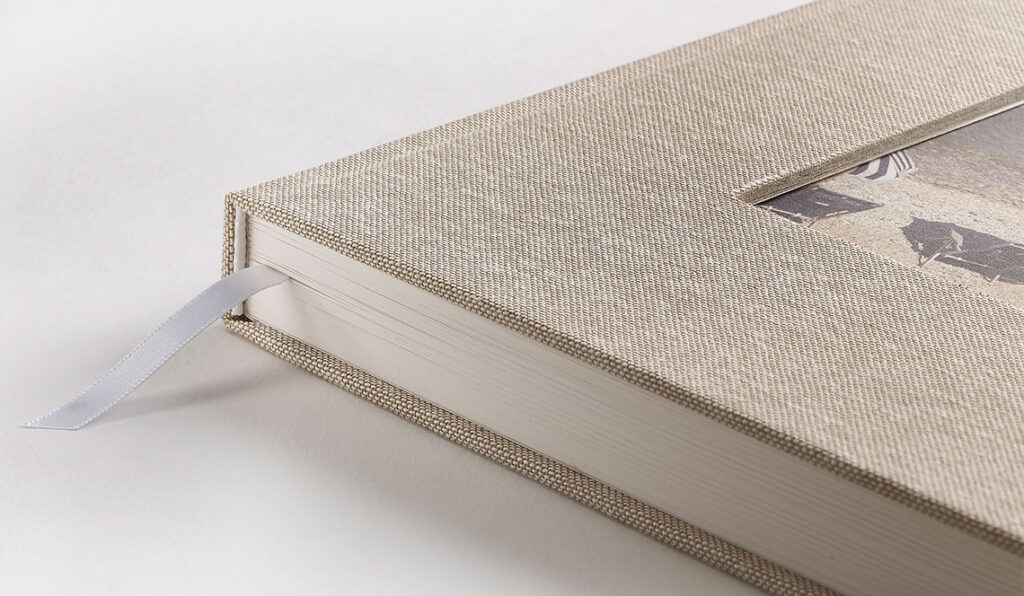
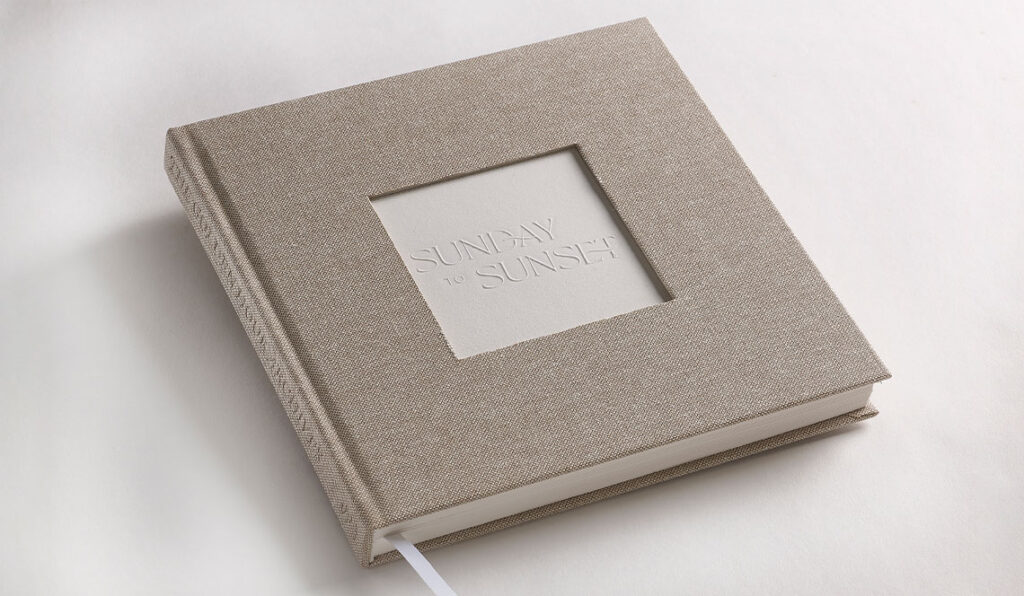
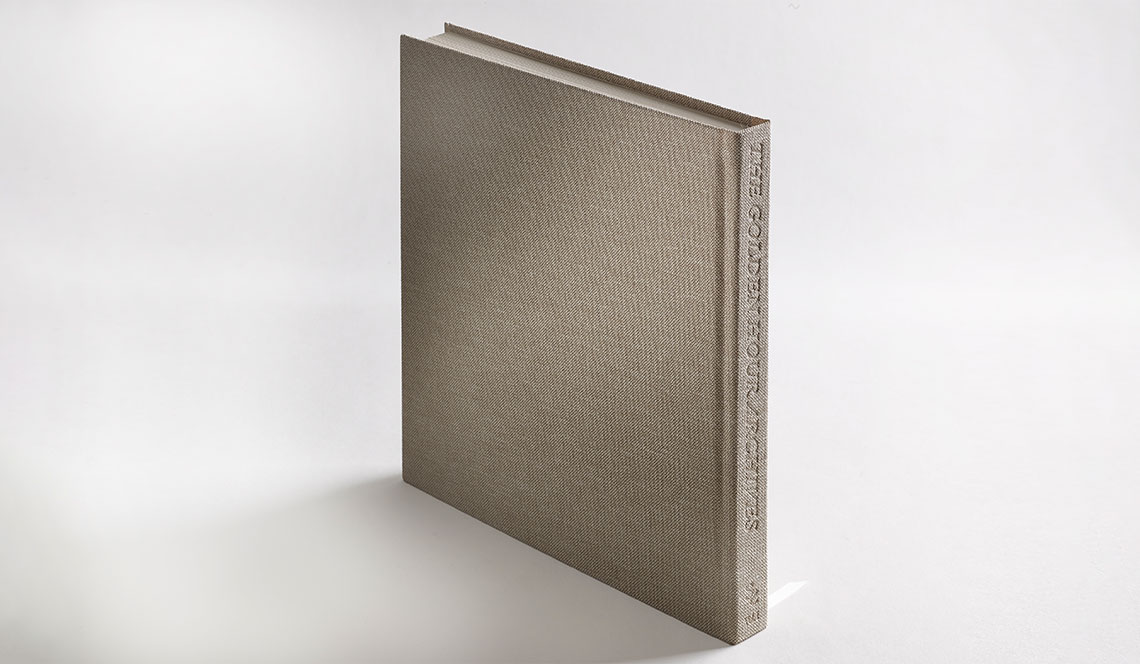
The first point of contact with “The Golden Hour Archive” is its distinctive clothbound cover. The choice of using uncoated linen book cloth was deliberate, aiming for a natural feel that exudes quality and invites touch. This wasn’t just about aesthetics; the linen’s inherent texture adds a layer of sensory engagement, hinting at the thoughtful content within.
To further enhance the understated elegance of the cover, we employed blind debossing on the spine. This technique involves pressing a die into the material to create a subtle, recessed impression of the title without the use of ink. The result is a sophisticated detail that speaks to the journal’s premium nature without being overtly loud. This subtle branding reinforces the journal’s purpose as a personal archive, where the focus remains on the user’s content.
The cover construction itself involved wrapping by hand the chosen book cloth meticulously around a sturdy book board using a specialized turned edge technique. This traditional method ensures a clean, durable finish with neatly folded edges, contributing to the overall longevity and high-quality feel of the book.
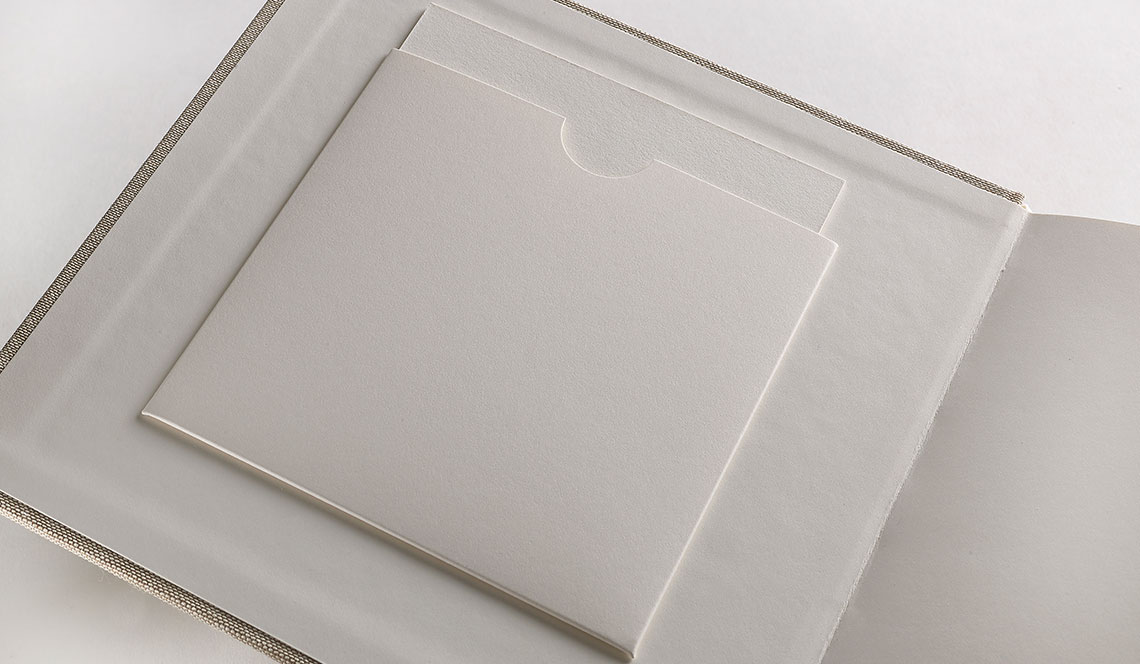
A unique design element of the front cover is the die-cut 4” x 4” square. This intentional window offers a glimpse into the journal’s inner workings and provides an opportunity for personalization. Behind this window, on the inside of the front cover, we affixed a die-cut sleeve that creates a pocket, allowing the Archive’s owner to insert a personal or inspirational image. This could be a meaningful photograph or one of the accompanying digitally printed inserts, further emphasizing the journal’s role as a customizable “canvas” for each owner’s creativity.
The heart of the Archive: a framework for reflection.
Inside, the text pages and endleaves were both printed onto Accent Opaque Text paper stock. This paper was selected for its excellent writability and its warm tone, which provides a pleasing and accommodating backdrop for journaling, sketching, and adhering mementos. The smooth finish ensures a satisfying experience for the user’s pens and pencils.
The text pages of the journal were printed using offset lithography, which ensured clean, crisp text and consistent ink coverage throughout the 204 interior pages. The black ink maintains a classic and versatile framework, allowing the user’s own colorful additions – whether through writing, drawings, or adhered items – to truly stand out.
To ensure the beautiful clothbound journal’s longevity and signature lay-flat quality, we employed Smyth sewn binding. This traditional bookbinding technique involves sewing together sections or “signatures” of the folded pages with thread, thus creating a strong and durable spine that is resistant to cracking and separating. Smyth sewn binding allows The Golden Hour Archive to open flat, making it easier to write or work across the spreads without damaging the spine.
Finally, we cased the sewn pages into their covers along with blank end leaves. The end leaves, made from the same 80# Accent Opaque Warm White Smooth Text paper as the interior pages, provide a clean and sturdy connection between the text block and the cover.
Beyond the book: How we created the supporting accessories.
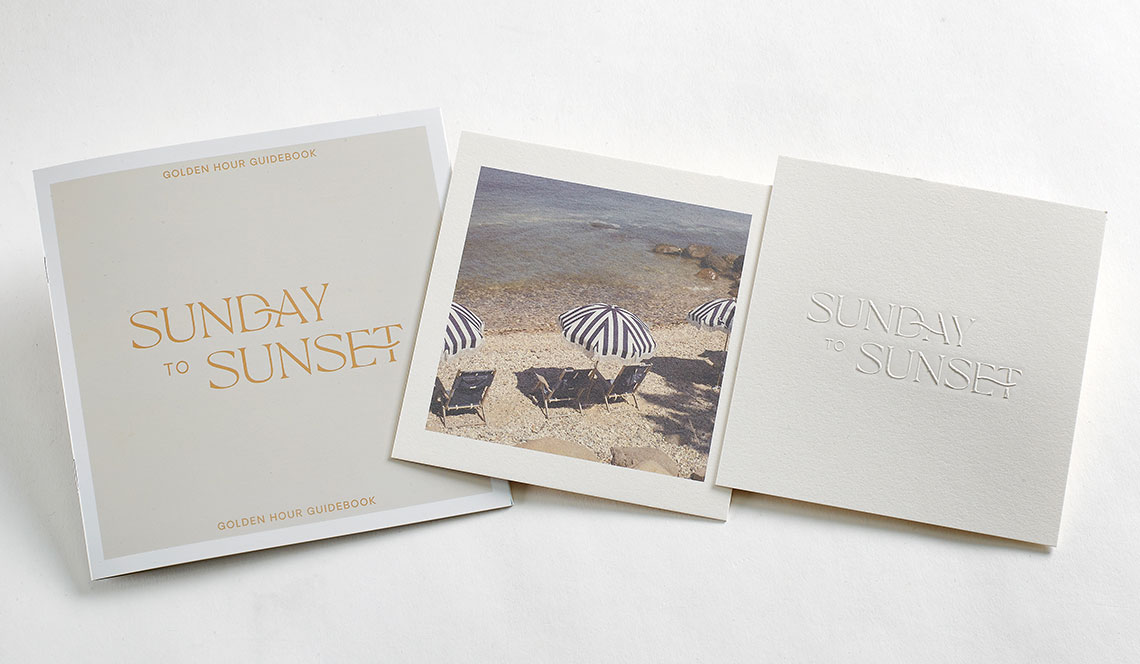
“The Golden Hour Archive” was conceived as more than just an exquisite clothbound journal. Sunday to Sunset also created a range of supporting accessories – the Golden Hour Guidebook, Journal Cover Inserts, and Embossed Inserts – designed to enhance the user’s experience. DATAGRAPHIC was also involved in the production of these elements, utilizing a variety of printing techniques to achieve their unique characteristics.
For these supplementary pieces, we employed a combination of offset lithography using 3 PMS colors and an aqueous coating, HP Indigo digital printing, as well as registered embossing and blind embossing. The use of PMS (Pantone Matching System) colors in the offset lithography allowed for precise color reproduction and vibrant visuals while the aqueous coating provided a protective layer and a smooth finish.
Our use of digital printing for the inserts offered both flexibility and cost savings without compromising on quality. Registered embossing, where the raised design aligns perfectly with printed elements, added a tactile and visual dimension to specific elements. And the blind embossing on the clothbound journal’s spine created a subtle, light-catching impression, which added an extra touch of sophistication.
Why DATAGRAPHIC excels at producing such unique clothbound journals.
The creation of “The Golden Hour Archive” was a collaborative effort between Sunday to Sunset and DATAGRAPHIC, driven by a shared commitment to quality and a deep understanding of the product’s purpose. From the selection of the unique clothbound material to the intricate binding and finishing techniques, every decision was made with the owner’s experience in mind.
We are incredibly proud to have played a role in bringing this exceptional journal to life. “The Golden Hour Archive” stands as a beautiful example of how thoughtful design, combined with meticulous printing and finishing, can create a product that is not only aesthetically pleasing but also deeply meaningful and functional. It’s a testament to our belief that, in the world of print, the details truly make the difference, transforming a seemingly simple object into a cherished companion for reflection and creativity.
This project underscores DATAGRAPHIC’s commitment to exceeding expectations and delivering print solutions that truly embody the vision of our clients. We believe that “The Golden Hour Archive” will serve as a valuable “canvas for reflection” for its owners, growing with them as they capture their unique journeys, one Sunday and one sunset at a time.